Electric Golf Carts for Sale: A Complete Buyer’s Guide
Understand battery options, seating capacity, charging, maintenance, product condition, and delivery before choosing your next electric golf cart.
An electric golf cart can be a practical choice for recreational travel, private-property use, and other applications where a compact, rechargeable vehicle meets your needs. However, not every electric cart offers the same battery, passenger capacity, features, or ownership experience.
If you’re researching electric golf carts for sale, the most useful starting point is to understand how you plan to use the cart. Consider where it will operate, how many passengers it needs to carry, how often it will be used, and whether you have a suitable charging location.
This guide from Bennett’s Golfcarts explains the major buying considerations and provides a checklist to help you compare individual product listings. You can also browse our online shop to review currently available products.
Start with seating capacity, battery type and condition, charging requirements, intended terrain, manufacturer specifications, and the total purchase price. Then confirm product condition, delivery arrangements, and any applicable warranty. The right configuration depends on your actual use rather than one feature alone.
1. What Is an Electric Golf Cart?
An electric golf cart uses a battery-powered electric motor rather than a gasoline engine for propulsion. Its battery supplies energy to the motor through the cart’s electrical and control systems. When the battery needs replenishing, the cart is connected to an appropriate charger.
Electric carts are often associated with golf courses, but their applications can extend to suitable private properties, recreational facilities, and other environments. The appropriate use depends on the cart’s design, its capabilities, property rules, and applicable local law.
Electric golf carts are not interchangeable with road-approved vehicles. Equipment, registration, insurance, and operating requirements can differ by jurisdiction. Before considering public-road use, confirm the vehicle’s classification and the rules that apply where you intend to operate it.
For Connecticut-specific legal information, consult the Connecticut Department of Motor Vehicles . Do not assume that a golf cart may be driven on a road simply because another customer uses a similar-looking vehicle there.
2. Why Do Buyers Consider Electric Golf Carts?
Electric golf carts offer a different ownership experience from gasoline-powered carts. The advantages that matter most will depend on the model, usage pattern, charging arrangements, and maintenance needs.
Quieter operation
An electric drivetrain generally produces less propulsion noise than a small combustion engine. This can be appealing in settings where a quieter vehicle is desirable. Tire noise, mechanical components, and the surrounding environment still contribute to overall sound.
No routine gasoline refueling
Electric carts obtain energy through charging rather than filling a fuel tank. This changes how owners plan daily use: instead of visiting a fuel station, they need access to a suitable electrical supply and enough time to recharge.
Different maintenance requirements
Electric carts do not have the same engine-oil and fuel-system maintenance needs as gas-powered models. However, they still require inspections and care. Tires, brakes, suspension, electrical connections, charging equipment, and batteries remain important.
Lead-acid batteries may require maintenance procedures that differ from those of lithium battery systems. Always follow the instructions supplied for the actual battery and cart.
Convenient use in suitable environments
For owners with an appropriate charging location and predictable travel needs, electric operation may fit naturally into their routine. The key is matching the vehicle’s capabilities to the intended application.
3. Understanding Electric Golf Cart Batteries
The battery is one of the most important components to evaluate when purchasing an electric golf cart. Its chemistry, capacity, condition, and compatibility can affect charging, maintenance, usable travel distance, and future replacement considerations.
Two broad categories buyers may encounter are lead-acid and lithium-based battery systems. These categories include different designs and specifications, so a product listing should identify the actual system rather than relying on a general label alone.
Lead-acid batteries
Lead-acid systems have a long history in golf cart applications. Depending on the design, they may require specific charging, inspection, and maintenance procedures.
When evaluating a used cart with lead-acid batteries, ask about battery age, maintenance history, charging performance, and any available condition information. A clean-looking cart does not establish that its battery is in good condition.
Lithium batteries
Lithium-based systems can offer different weight, charging, and maintenance characteristics. Their actual performance depends on battery chemistry, capacity, management electronics, charger compatibility, and operating conditions.
Do not assume that every lithium battery is compatible with every electric golf cart. Battery conversions can involve electrical, mechanical, and charging requirements that should be assessed against manufacturer guidance.
| Consideration | Lead-acid | Lithium-based |
|---|---|---|
| Maintenance | Depends on design; some types require routine attention. | Different maintenance needs; follow battery-system guidance. |
| Weight | Often heavier for a comparable usable-energy application. | May offer a weight advantage, depending on configuration. |
| Charging | Requires an appropriate lead-acid charging system. | Requires a compatible charger and battery-management system. |
| Purchase cost | Initial battery cost can differ by size and design. | Initial cost can be higher; compare actual quotations. |
| Used-cart assessment | Check age, care, and available condition records. | Check system compatibility, condition, and documentation. |
For general battery safety information, see the U.S. Department of Energy . For a specific cart, prioritize the manufacturer’s documentation and the instructions provided with its installed battery system.
4. How Far Can an Electric Golf Cart Travel?
There is no single travel-distance figure that applies to all electric golf carts. Usable range depends on battery capacity and condition, vehicle design, passenger and cargo load, terrain, driving pattern, temperature, and other factors.
For example, a cart operating on relatively level ground with a light load may have different energy demands from one carrying several passengers on hilly terrain. Frequent acceleration, stopping, and accessory use can also affect energy consumption.
Battery age and condition are particularly relevant for used electric carts. A published specification for a new battery should not automatically be treated as the expected performance of an older battery.
Questions to ask about range
- What battery chemistry and capacity does this particular cart use?
- Is the stated range a manufacturer estimate or a measured result?
- Under what load, terrain, and operating conditions was it measured?
- What is known about the condition of the installed battery?
- Does the expected travel distance suit your typical use with a reasonable reserve?
If the product listing does not provide enough information, contact Bennett’s Golfcarts before placing an order.
5. Choosing the Right Seating Capacity
Seating capacity affects how a golf cart can be used, how much space it occupies, and how it may handle different passenger loads. Start by considering how many people you expect to carry regularly, rather than selecting a configuration based only on its appearance.
Two-passenger carts
A two-passenger configuration may suit applications where a compact vehicle and limited passenger capacity are sufficient. Compare the available storage, overall dimensions, and other model-specific features.
Four-passenger carts
Four-passenger carts provide additional seating, but the exact arrangement varies. Some use a rear-facing seat, while others may have a different layout. Check the actual seat configuration and manufacturer-rated capacity.
Six-passenger carts
A six-passenger configuration may be relevant when more seating is needed. It may also require more parking space and careful attention to dimensions, turning characteristics, and rated load capacity.
Do not exceed the rated capacity
The number of visible seats does not replace the manufacturer’s passenger and load ratings. Review the applicable instructions and ensure passengers use the vehicle as intended.
Browse the Bennett’s Golfcarts shop to compare the configurations currently listed.
6. Which Features Should You Compare?
Two electric carts with similar seating may offer very different equipment. Build a list of features that matter for your intended use, then compare the actual specifications of each candidate.
Roof and weather protection
A roof can provide shade, while compatible windshields or enclosures may offer additional protection from certain weather conditions. The available protection depends on the accessory and its design.
Lighting and visibility
Check whether the cart includes the lighting and visibility equipment appropriate for its intended operating environment. The presence of lights does not by itself establish public-road eligibility.
Storage and cargo space
Consider where personal items, equipment, or permitted cargo will be carried. Storage accessories should be compatible with the vehicle and used within its rated limits.
Tires and intended surfaces
Tire design can affect traction, ride characteristics, and suitability for different surfaces. Compare the manufacturer-recommended tire specifications with the conditions where the cart will operate.
Charging equipment
Confirm which charger is supplied, whether it is compatible with the installed battery, and what electrical supply it requires. Do not assume that chargers are interchangeable between models.
7. New vs. Used Electric Golf Carts
Both new and used electric golf carts can be worth considering, but they require different questions during the buying process.
For a new cart, review the manufacturer’s specifications, included equipment, stated condition, and any applicable warranty. Confirm whether the exact configuration shown is the configuration offered.
For a used cart, pay particular attention to the installed battery, maintenance history, tires, brakes, body, seating, electrical features, and any modifications.
Ask whether available documentation supports claims about condition or recent maintenance. A description such as “refurbished” should be understood in the context of the actual work disclosed for that product.
Bennett’s Product Condition Policy explains the importance of reviewing each listing’s condition information before purchase.
8. Understanding the Total Cost of Ownership
The advertised purchase price is only one part of the cost of owning an electric golf cart. A useful comparison includes the amount payable at checkout and the expected ownership requirements.
Purchase price and delivery
Compare the product price, applicable taxes, shipping charge, and any other disclosed order-specific costs. Bennett’s Golfcarts uses flat-rate shipping, with the applicable amount displayed at checkout.
Battery condition and replacement
Battery replacement can be a significant ownership consideration. The relevant cost depends on the installed system and compatible replacement options. For a used cart, understand what is known about the existing battery.
Electricity and charging
Charging costs depend on energy consumption, charging efficiency, and the electricity rate applicable to your location. Avoid relying on a generic monthly estimate that does not reflect your usage pattern.
Maintenance and accessories
Tires, brakes, batteries, and other components require appropriate attention over time. Optional accessories may add to the total amount spent.
| Cost category | What to confirm |
|---|---|
| Initial purchase | Product price and included equipment. |
| Shipping | Applicable checkout charge and freight arrangements. |
| Battery | Type, condition, and future replacement considerations. |
| Charging | Compatible charger and suitable electrical supply. |
| Maintenance | Model-specific inspection and service requirements. |
| Accessories | Compatibility and optional equipment costs. |
9. Buying an Electric Golf Cart in Connecticut
Bennett’s Golfcarts is located at 57 Watertown Rd, Morris, CT 06763. Customers researching golf carts in Connecticut can browse available products online and contact the business with questions about particular listings.
Local buying considerations include where the cart will be used, the terrain, seasonal storage, charging arrangements, and applicable operating restrictions.
Connecticut weather makes storage planning especially relevant. If the cart will not be used for an extended period, follow the manufacturer’s guidance for battery care, charging, and storage. Procedures differ between battery systems.
Customers should also distinguish private-property use from public-road operation. Check current state and local requirements before purchasing a cart for a particular transportation purpose.
For information about our business, visit About Bennett’s Golfcarts . If you plan to visit, contact us first to confirm the relevant arrangements and product availability.
10. Shipping and Delivery: What to Know
Delivery is an important consideration when buying a complete golf cart. Unlike a small accessory, a cart may require freight transportation and delivery coordination.
Bennett’s Golfcarts ships to all 50 U.S. states, subject to the applicable product and delivery arrangements. Complete carts are delivered by freight carrier.
Standard in-stock orders have an estimated processing period of 1–3 business days. Estimated delivery after dispatch is 3–7 business days, giving an overall standard estimate of 4–10 business days. These are estimates, not guaranteed arrival dates.
Assembly or installation is included with delivery as applicable, but the exact scope depends on the product and order arrangements. Confirm the details for your cart before purchasing.
Read the full Shipping & Delivery Policy for additional information.
11. Electric Golf Cart Buying Checklist
Before placing an order, use the following checklist to compare products systematically. It can help identify missing information before you commit to a purchase.
- Define the intended use. Identify where the cart will operate and the typical distance it needs to cover.
- Choose seating capacity. Compare passenger needs with manufacturer-rated seating and load limits.
- Confirm battery details. Review chemistry, capacity, condition, and charging requirements.
- Review the actual listing. Confirm the specific model, configuration, included items, and stated condition.
- Consider terrain. Assess whether the cart’s specifications suit the intended operating environment.
- Check dimensions. Consider storage, parking, access, and maneuvering space.
- Compare total costs. Include checkout charges, charging, maintenance, and potential battery replacement.
- Understand delivery. Review freight arrangements, timing estimates, and included assembly or installation.
- Read customer policies. Check cancellation, return, and applicable warranty terms.
- Ask unresolved questions. Contact the dealership before ordering when a material detail remains unclear.
12. Frequently Asked Questions
Are electric golf carts better than gas golf carts?
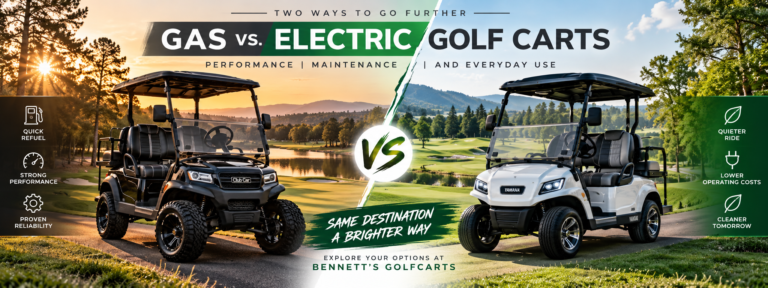
Neither power type is the right choice for every situation. Electric carts offer rechargeable operation and different maintenance requirements, while gas carts have their own fueling and operating characteristics. Compare the actual models against your intended use.
How long does an electric golf cart battery last?
Battery lifespan varies by chemistry, design, use, charging practices, storage, and maintenance. Ask about the actual battery installed in the cart and follow the manufacturer’s guidance.
Can I charge an electric golf cart at home?
Home charging may be possible when a suitable electrical supply and compatible charger are available. Confirm the manufacturer’s electrical requirements and obtain qualified assistance where needed.
How many passengers can an electric golf cart carry?
Capacity depends on the model. Two-, four-, and six-passenger configurations are among the options buyers may encounter. Follow the manufacturer’s passenger and load ratings.
Can an electric golf cart be used on public roads?
Public-road use depends on vehicle classification, equipment, and applicable state and local rules. Check the requirements for your specific location. Do not assume that every electric cart is road-legal.
What should I check when buying a used electric cart?
Review battery condition, charging performance, tires, brakes, body, electrical equipment, maintenance information, and the product’s disclosed condition.
Does Bennett’s Golfcarts deliver complete carts?
Yes. Complete golf carts are delivered by freight carrier, subject to applicable arrangements. Review the shipping policy and the information provided for your order.
What is Bennett’s Golfcarts’ return window?
The standard return window is 14 days from delivery, subject to the applicable return conditions. Read the complete Refund & Returns Policy before requesting a return.
13. Find an Electric Golf Cart That Fits Your Needs
Buying an electric golf cart is easier when you compare the details that affect everyday ownership. Battery type, passenger capacity, charging, condition, features, and delivery all deserve attention.
Start with your intended use, narrow the available configurations, and review each product’s specifications carefully. If an important detail is missing, ask before placing your order.
Bennett’s Golfcarts provides an online shop and customer contact options for questions about available products and purchases.
Explore Bennett’s Golfcarts
Browse available products or contact our team with questions about a particular electric golf cart.
Shop Golf Carts → Contact Us →Further Reading & Customer Resources
- Connecticut Department of Motor Vehicles — official information about vehicle-related requirements.
- U.S. Department of Energy — general energy information.
- Bennett’s Product Condition Policy
- Bennett’s Warranty Policy
- Bennett’s Refund & Returns Policy